
Color Theory for Cookie Decorators: Creating Palettes That Pop
Color can make or break a cookie design. Understanding the basics of color theory will help you create cookies that are not just delicious, but absolutely stunning.
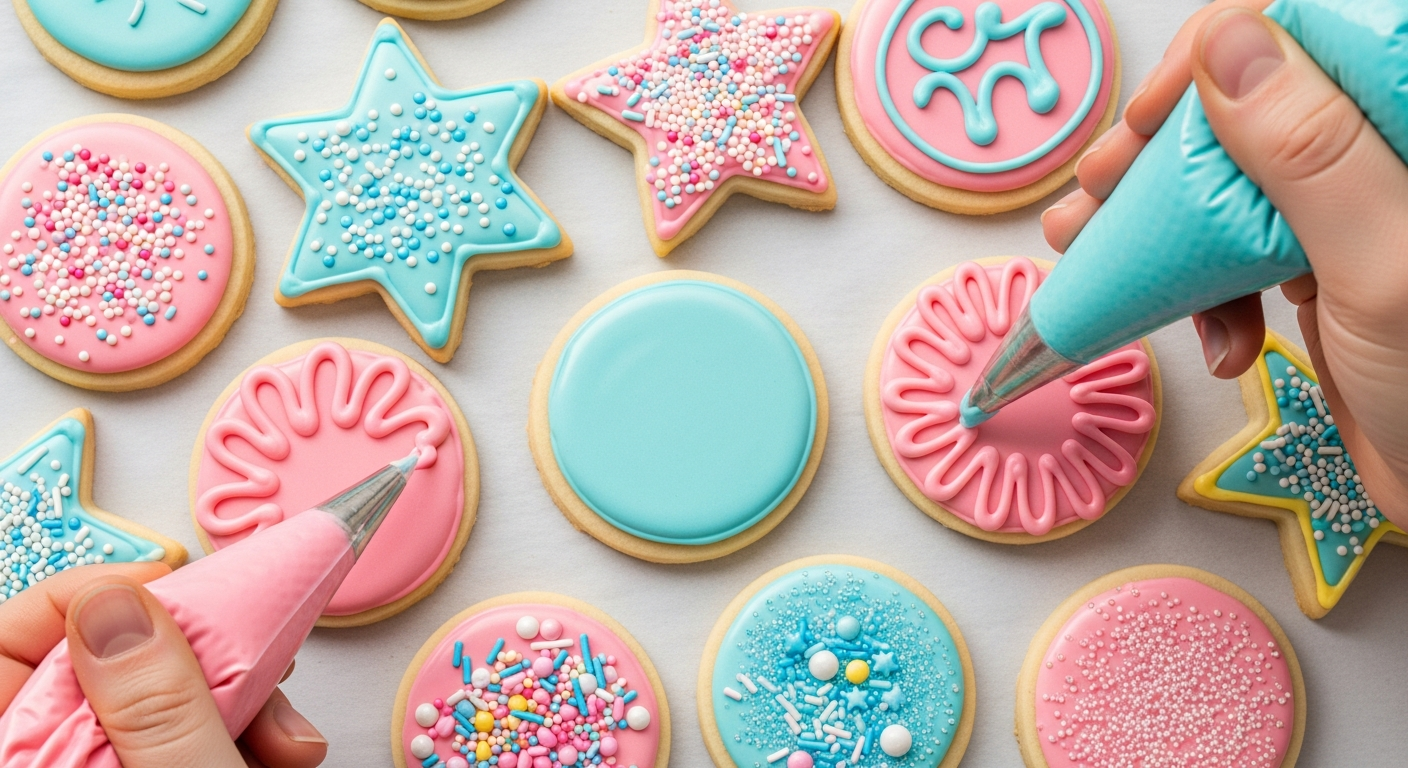
The Color Wheel Basics
Every decorator should understand these relationships:
Complementary Colors
Colors opposite each other on the wheel (like orange and blue, or purple and yellow) create vibrant, eye-catching contrast.
Analogous Colors
Colors next to each other (like red, orange, and yellow) create harmonious, cohesive looks.
Triadic Colors
Three colors equally spaced on the wheel create balanced, dynamic designs.
Building Your Palette
Step 1: Start with Inspiration
Look at:
- The occasion or theme
- Current design trends
- Seasonal colors
- Client preferences
Step 2: Choose Your Anchor Color
Pick one main color that will be the star of your design.
Step 3: Add Supporting Colors
Select 2-3 complementary shades that enhance your anchor.
Step 4: Include Neutrals
White, black, and metallic tones give the eye a rest and add sophistication.
Popular Palettes for 2025
**Modern Minimalist:** White, soft gray, gold accents
**Boho Chic:** Terracotta, sage green, cream, dusty rose
**Bold & Playful:** Electric blue, hot pink, lime green
**Elegant Classic:** Navy, burgundy, gold, ivory
Teaching Color to Students
Try these exercises in class:
- Provide color swatches and have students create their own palettes
- Show the same cookie design in different color schemes
- Discuss how colors evoke different emotions
Pro Tips
1. **Test your colors** - Icing can dry slightly different than when wet
2. **Consider the cookie base** - Vanilla vs. chocolate affects perceived colors
3. **Use gel colors** - They're more vibrant and don't thin your icing
4. **Less is more** - 3-4 colors usually work better than 7
Master color, and your cookies will speak before anyone takes a bite!